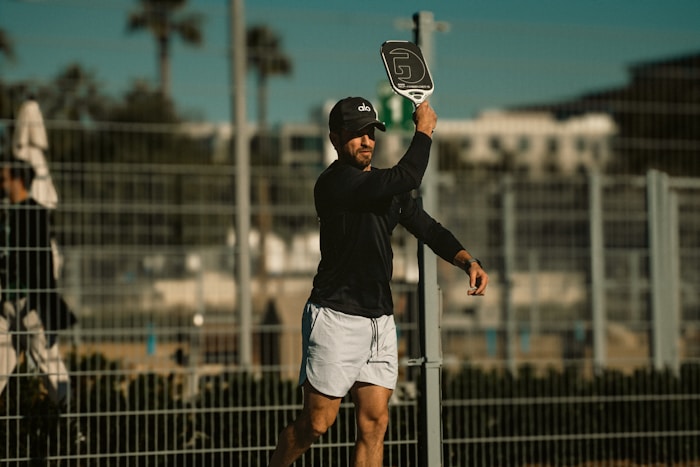
New to pickleball—but not new to racquet sports?
Stop Getting Embarrassed by “Soft Shot” Pickleball Players
A simple “Skill Swap” guide for ex-racquet athletes 40+ so you stop donating points and start controlling rallies fast.
A simple “Skill Swap” guide for ex-racquet athletes 40+ so you stop donating points and start controlling rallies fast.
 The Backstory
I’m not a lifelong pickleball “guru.”
I’m a racquetball player who had to solve the exact problem you’re dealing with.
I played for two decades and was dominating my region for 4 years running (both at 3-wall and indoor).
Then I moved into pickleball and saw what most ex-racquet athletes miss:
Pickleball rewards IQ… but only if you aim it correctly.
Once I made the right swaps, everything clicked fast.
This guide is the shortcut version.
The Skill Swap system (how old racquet skills translate into PB winners)
Kitchen + net play strategies (what to do, where to stand, what to stop doing)
Dinks, drops, resets, and smart speed-ups (so you don’t get carved up)
Doubles communication + positioning (stop guessing, start coordinating)
The Ultimate Pickleball Jumpstart Guide — $49 value
The Skill Swap system that converts your old racquet instincts into pickleball decisions that win.
Tips + Drills — $14 value
Simple reps that build touch, kitchen confidence, and control without overtraining.
BONUS #1: Skill Swap Quick Reference — $19 value
A one-page “before you play” refresher so the right moves stay top-of-mind.
BONUS #2: Top 5 Injury Red Flags Quick Reference — $14 value
The quick warning signs that keep 40+ athletes from turning a tweak into weeks off.
BONUS #3: 7-Day Jumpstart Checklist — $24 value
Daily steps that stack the right skills in the right order - so you improve fast without guessing.
BONUS #4: Personal Scorecard — $9 value
A simple fill in scorecard to help you identify areas that are causing you points and your strategy for remedying along with communication reminders for you and your doubles partner.
Total Value: $129
Your Price Today: Only $9.
“This is short, practical, and designed to be used on the court - not admired on your Kindle.”
“The Skill Swap idea was the missing link for me. I stopped trying to ‘win’ with power and started winning with placement and kitchen discipline. Within two sessions I felt like I belonged out there instead of chasing points.”

Former squash player
“I came from tennis and kept over-swinging and rushing. The tips on dinks/resets and when to speed up instantly cleaned up my errors. The quick reference is gold - I read it in the parking lot and play noticeably calmer.”

Former tennis player
“Doubles was my biggest weakness. The simple communication rules and positioning notes saved us so many free points. I’m not the guy getting picked off at the net anymore and I’m playing hard without feeling wrecked the next day.”

Former racquetball player
You walk onto the court and you’re not “figuring it out.”
You have a plan.
You know what to focus on.
You stop swinging like it’s tennis or racquetball.
You start placing balls where people hate them.
You understand the kitchen.
Your doubles partner feels like a partner.
And the best part?
You feel that old identity coming back:
“I’m not new. I’m converted. And I’m dangerous.”